On this page
The AI operating system, in brief
I run a set of AI agent teams on my own laptop. It is not a product. It is written rules, role cards, plain files and a few small scripts on top of one AI coding engine.
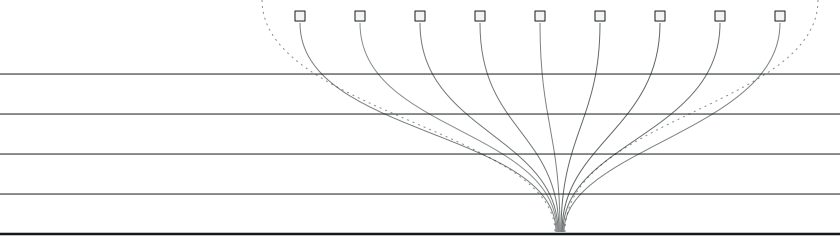
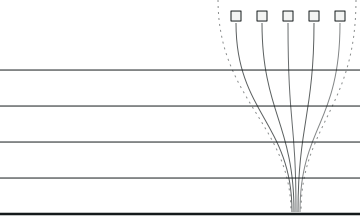
How it is organised, how authority works and what went wrong are set out in full on the AI operating system page.
Skills and toolkits
Under the teams sits a library of written methods. A skill is one method for one kind of job: a short description that tells the AI when to use it and when not to, then the steps, the mistakes it guards against and the rules it must keep. A toolkit is a set of related skills, packaged and installed together.
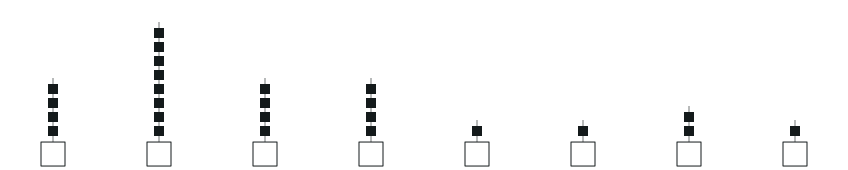
Thinking 4 skills
Four checks on my own reasoning: decide, verify, specify, and gate what ships.
- Works a hard call through options, trade-offs and bias, then records it.
- Checks every factual claim against its sources and grades each one.
- Interviews me to turn a fuzzy idea into a build-ready spec.
- The last check before anything leaves my hands, with an independent read.
Solutions 8 skills
A delivery method in plain words, one skill per stage, from requirements to testing. Each produces a plan, never the build.
- Finds where to start and runs the seven stages in order. DRAFT: Source not yet cleared
- Turns a fuzzy idea into clear requirements and acceptance criteria.
- Decides how the whole solution fits together, and why.
- Designs how the information is structured, with quality rules.
- Plans how to build it well: what to use, risks and shortcuts.
- Makes a screen, page or form clear and easy to use.
- Works out how it could break and how to test it.
- Works out what the data actually says, keeping charts truthful.
Prompts 4 skills
Interviews me, then writes a ready-to-paste prompt or brief and files it in a library; also sets up projects.
- Interviews me, then writes a ready-to-paste chat prompt and saves it.
- Turns a rough task into an agent brief with guardrails and checks.
- Writes the hand-over brief that moves work into Claude Code. DRAFT: Source not yet cleared
- Sets up a project's files and logs, and repairs them later.
Meetings 4 skills
Minutes, transcript clean-up, a terminology glossary and a personal library of video transcripts.
- Chair-ready minutes from a corrected transcript, every claim traced to source.
- Corrects raw meeting transcripts: names, terms and speakers, with an audit log.
- Keeps a versioned glossary of names and terms, every change reviewed first.
- Transcribes chosen videos into a filed, summarised, searchable library.
Images 1 skill
Turns an idea into an agreed brief, then images or video, every spend costed and approved first.
- Idea to agreed brief to images or video; every spend approved first.
Local AI 1 skill
Helps me choose, install and prompt the image models that run on my own laptop.
- Helps me choose, install and prompt the image models on my laptop. DRAFT: Source not yet cleared
Upkeep 2 skills
Finds the right skill for a job and keeps the AI's long-term notes lean.
- Names the skill, or sequence of skills, that fits a problem.
- Keeps the AI's long-term notes small and findable; deletes nothing.
Teams 1 skill
Designs and briefs teams of AI sessions that report to me.
- Designs, converts and briefs AI agent teams that report to me.
-
Thinking 4 skills
Four checks on my own reasoning: decide, verify, specify, and gate what ships.
- Decision partner Works a hard call through options, trade-offs and bias, then records it.
- Fact-checker Checks every factual claim against its sources and grades each one.
- Spec interviewer Interviews me to turn a fuzzy idea into a build-ready spec.
- Ship check The last check before anything leaves my hands, with an independent read.
-
Solutions 8 skills
A delivery method in plain words, one skill per stage, from requirements to testing. Each produces a plan, never the build.
- Solution guide Finds where to start and runs the seven stages in order. DRAFT: Source not yet cleared
- Scope Turns a fuzzy idea into clear requirements and acceptance criteria.
- Approach Decides how the whole solution fits together, and why.
- Data design Designs how the information is structured, with quality rules.
- Build plan Plans how to build it well: what to use, risks and shortcuts.
- Experience Makes a screen, page or form clear and easy to use.
- Quality Works out how it could break and how to test it.
- Insights Works out what the data actually says, keeping charts truthful.
-
Prompts 4 skills
Interviews me, then writes a ready-to-paste prompt or brief and files it in a library; also sets up projects.
- Chat prompts Interviews me, then writes a ready-to-paste chat prompt and saves it.
- Agent briefs Turns a rough task into an agent brief with guardrails and checks.
- Code hand-overs Writes the hand-over brief that moves work into Claude Code. DRAFT: Source not yet cleared
- Project set-up Sets up a project's files and logs, and repairs them later.
-
Meetings 4 skills
Minutes, transcript clean-up, a terminology glossary and a personal library of video transcripts.
- Meeting minutes Chair-ready minutes from a corrected transcript, every claim traced to source.
- Transcript clean-up Corrects raw meeting transcripts: names, terms and speakers, with an audit log.
- Terminology glossary Keeps a versioned glossary of names and terms, every change reviewed first.
- Video transcript library Transcribes chosen videos into a filed, summarised, searchable library.
-
Images 1 skill
Turns an idea into an agreed brief, then images or video, every spend costed and approved first.
- Creative director Idea to agreed brief to images or video; every spend approved first.
-
Local AI 1 skill
Helps me choose, install and prompt the image models that run on my own laptop.
- Local image desk Helps me choose, install and prompt the image models on my laptop. DRAFT: Source not yet cleared
-
Upkeep 2 skills
Finds the right skill for a job and keeps the AI's long-term notes lean.
- Skill finder Names the skill, or sequence of skills, that fits a problem.
- Memory upkeep Keeps the AI's long-term notes small and findable; deletes nothing.
-
Teams 1 skill
Designs and briefs teams of AI sessions that report to me.
- Team launcher Designs, converts and briefs AI agent teams that report to me.
Two habits run through it. A skill that produces something significant interviews me before it builds, then reads the plan back for my confirmation. A skill that changes things keeps its own task list and audit log as it works, so any run can be resumed and checked afterwards.
The skills live in one folder on one machine. They are packaged there and published nowhere else.
The count moves, so every figure here carries its date. The library held 98 skills at the audit of 12 July 2026, 59 after the consolidation published on 13 July 2026, and 34 on 28 September 2026, after the September cut. Counted on 19 October 2026, it holds 25 skills in 8 toolkits.
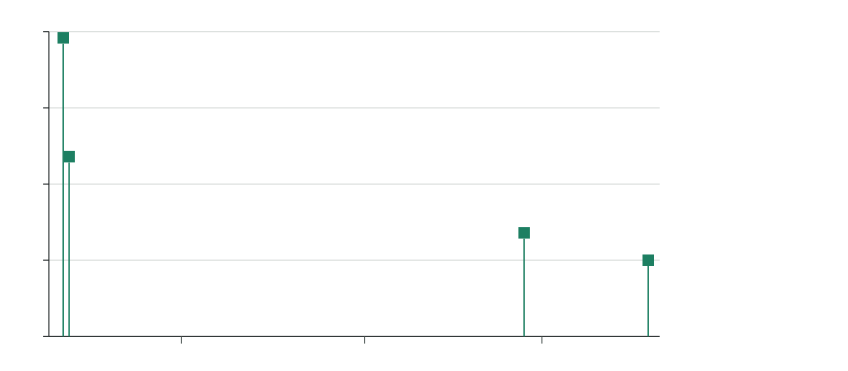
The July 2026 audit found roughly 43 of the 98 skills were slices or twins of another. The consolidation merged them and moved everything it retired aside, deleting nothing.
How I use it
The most valuable use is not producing documents. It is thinking.
A partner, not a yes-machine
A standing instruction tells it to test my framing before agreeing, challenge weak premises, separate fact from inference from guess, and say plainly when it does not know. A partner that agrees with everything passes a weak idea off as a considered one.
Deciding in the open
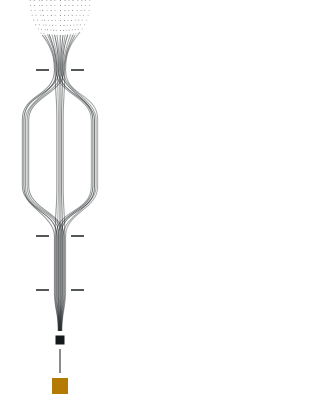
A decision with real weight goes through a set order: an outside view first, three or more options with their trade-offs, a bias check, and the strongest case against the course I lean towards. The result is a written decision record I can check against the outcome. The machine does not decide.


- Outside view Before any option is chosen, the method asks how decisions like this one usually turn out. It tests my optimism that this case is different. DRAFT: Source not yet cleared
- Options The method sets out three or more options, with what each one buys and what it costs. No single idea is simply rubber-stamped. DRAFT: Source not yet cleared
- Bias check The reasoning is checked for bias. One example is anchoring on the first option. DRAFT: Source not yet cleared
- Case against The method argues the strongest case against the course I lean towards. It looks for the reason I am wrong. DRAFT: Source not yet cleared
- Record The result is a written decision record. Later I can check it against how things turned out. DRAFT: Source not yet cleared
- Adriaan The line ends with me, because the machine does not decide. Its job is to test my judgement, not to agree with it or replace it. DRAFT: Source not yet cleared
Verifying before anything ships
The method is to check every checkable claim, figure, date and quotation against primary sources and grade it true, false, misleading or unsupported. A material claim that cannot be verified is designed to stop the work. Where no source exists, it says so; it never invents one.
From a half-formed idea to a specification
A vague want is questioned into a build-ready specification: the goal and what success looks like, then the inputs, steps, owners and the failure modes I had not thought of. It is read back to me before anything is built.
It tests my judgement. It does not replace it.
A self-assessment, with its gaps
In June 2026 I assessed the skill estate against published practice, and I revised the assessment on 29 September 2026. On 19 October 2026 I widened it to the whole system, at summary level. It is a self-assessment by one person, with no second reviewer, and it is not an independent check.
As at 19 October 2026 it covers the skill estate (8 toolkits and 25 skills, recounted that day) and the system that uses it: more than twenty agent teams, each with its own reviewer; a named reviewer from outside the team who reads the highest-stakes work before I see it; a blind review, run by a separate AI session that sees only the records and the deliverables; and a local model lane for routine duties, built but not running. The four verdicts below are my verdicts on the skill estate from 29 September 2026. I have not re-run them. The gaps are set out as they stand.
-
Anthropic's published guidance on skills
A close matchA close match, reached from practice rather than from the guidance. One conscious deviation: descriptions longer than Anthropic's examples, to route between near-identical skills.
-
The four OpenGitOps principles
Met only in partA small-scale match until 13 September 2026, when I retired the publishing pipeline. Since then the principles are met only in part, and versioning is the gap.
-
The NIST AI Risk Management Framework
Consistent with its directionConsistent with its direction: confirmation gates, audit trails and verification are built into the skills themselves. But this is self-governance by one person, with no separation of duties.
-
Published prompting practice
Consistent with itConsistent with it, with two low-risk deviations: markdown headings instead of XML tags, and my personal context loaded every time.




The gaps, as at 19 October 2026
The first nine were recorded on 29 September 2026. On 19 October 2026 I confirmed that the first still stands. I have not re-tested the others, and only the sixth is closed.
- No version control on the skill estate since I retired the publishing pipeline on 13 September 2026. The rule that nothing is deleted has already failed once: one archive of retired skills was lost.
- A bus factor of one: one author, one maintainer, one reviewer. The gates are real, but I administer them myself.
- Tests written, not yet run at scale. Trigger tests exist for eight skills (as at 28 September 2026); the loop that would run them has not been run at scale.
- Long skill descriptions: a deliberate bet on precise routing, paid for in tokens, and not yet tested by those trigger tests.
- Platform coupling: the toolkits depend on two install methods inside the AI applications, a plugin folder for Claude Code and a plugin file uploaded by hand to Cowork, and I control neither.
- Skills tied to one work programme, which made them hard to reuse. Closed on 5 September 2026, when that toolkit was archived.
- Manual steps: some instructions and settings must be pasted in by hand. They are written down so they are not forgotten.
- The knowledge layer is a design, not a result. I gathered the sources but did not finish extraction or synthesis, so it has never been tested, and nothing here rests on it.
- Much of the estate was written recently. Confidence in those skills rests on how they were built, not yet on a record of repeated use.
- The checks on the whole system are mine as well. The named reviewer, the blind review and the rules check are built in, but I set the rules they enforce, and the blind review is not yet calibrated.
- No saving is shown. The local model lane is built but not running, and I cannot yet show that it, or the teams, save anything.
- Trust is not yet earned by record. Every specialist is still at the lowest trust level, and promotion, and a spending budget for the whole system, are not yet in place.