What a team is
Instead of running a job as one long conversation, I hire a small team of AI sessions for it, give the team a written definition of done, and judge it on the result.
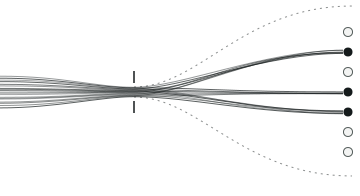
A team is either a standing desk for continuing duties or a project with an end date. More than twenty exist, as at 19 October 2026. Seven were set up between 24 and 28 September 2026, after an earlier design and an ad-hoc build team had been retired; this site's team was one of them. I speak to one coordinating session, the Chief of Staff, which opens and closes teams and keeps no more than three open at once.
How a team is set up
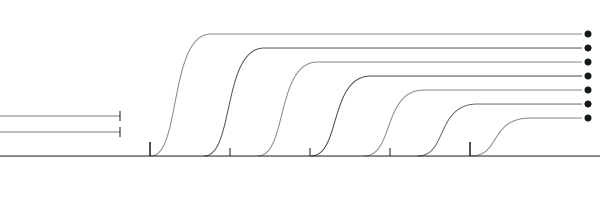
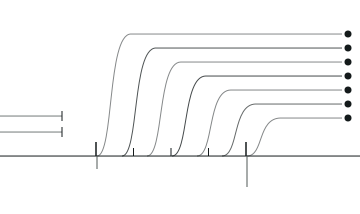
In September 2026 teams were made by a skill I designed and had built. As written then, it asked before it built, in rounds of up to four questions, and skipped anything the records already answered. Five things were settled before a team was designed:
- the deliverable
- written criteria for "good enough"
- the audience and the stakes
- what the team may read and write
- a budget, counted in tasks
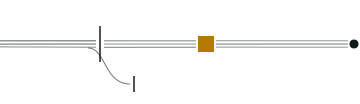
- Checkable If "good enough" could be written as criteria someone could check, the skill went ahead. Nothing was written until I had confirmed what it read back to me.
- Not checkable If "good enough" could not be written as criteria someone could check, the skill was written not to launch a team. An earlier design, with nothing defining done, had looped endlessly.
If the criteria could not be made checkable, the skill was written not to launch a team, and nothing was written until I had confirmed what it read back to me. Creating a team, or changing its charter, is a decision that stays with me.
The roles
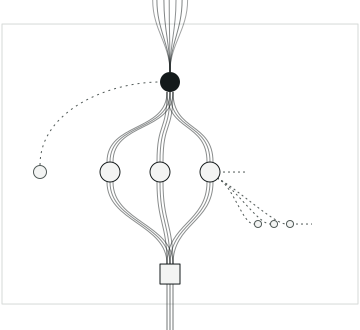
Each team has a lead who owns the task list, a reviewer, a knowledge steward and named specialists.

| Role | What it does |
|---|---|
| Lead | Owns the task list and can drop a task. After a failed review, an overrun, a correction from me or a project close, writes what to change, and how a repeat would show |
| Reviewer | Passes or fails the work, and never reviews its own. Only the reviewer's pass closes a task: the tool that writes the ledger refuses a pass from anyone else |
| Specialists | In the September design, two spare members were designed to train themselves into whatever role a job needed. All specialists are still at the lowest trust level |
| Subagents | Cheap, read-only helpers for bulk work: reading, recomputing, rendering, first-pass checks. The role that calls one records what came back |
| Role | What it does |
|---|---|
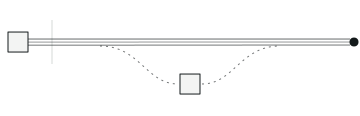
| Outside reviewer | For the highest-risk builds, a reviewer from outside the team looks once, with no briefing from the team: only the files and the criteria |
Every open session costs tokens while it waits, so a team stays small, and a missing skill is met by training a member rather than by adding one.
How a task is owned, checked and closed
Every task has an owner and a line in a ledger: one line for every change in the task's state, written only through one helper tool. A task closes in one of three ways: the reviewer passes it, the lead drops it, or a routine duty is complete and marked done.
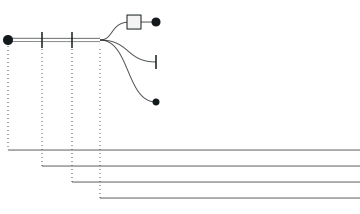
- Reviewer passes The reviewer passes or fails the work and never reviews its own. Only the reviewer's pass closes a task: the tool that writes the ledger refuses one from anyone else.
- Lead drops The lead owns the team's task list and can drop a task from it. Like every change in a task's state, the drop is written in the ledger.
- Routine duty done The third way a task closes. A routine duty that is complete is marked done. It still has an owner, and it still leaves its line in the ledger.
Every decision goes through five questions, in order, and anything external, irreversible, financial, legal, medical or sent is never decided by an agent.
As the skill was written in September 2026, I am asked at four checkpoints: plan approval, first draft, before final review, and delivery. Stop rules end the run: stop when the criteria pass, no extra round without my approval, fix only what blocks, no new scope. At close I score the session out of five and record a one-line lesson.
When a team fails
A team that fails does not design or review its own fix.
Two teams stopped in one evening.

On 16 October 2026 I stopped the mail team until a review, because it was making things worse. The same evening I stopped the software engineering team, for over-engineering and for running too long. Builds now come from one team only, and only from a specification that an analyst team has written and challenged first.
The false green.

The failure that recurs is a check that passes while the product is broken. A speech-tool build passed every per-fix check, and I found faults within minutes of using it. On the retirement dashboard the builder reported the suite green, and a separate QA round still found failures. On the speech tool that became a standing rule: I am never the one who finds a defect on first use, and the installed build is walked before it reaches me.
Designs that failed first.

One early version, with a window for every role, looped endlessly with no deliverable, because nothing defined done. Another refused work it had no member for. The September design came out of both.
Restarts and runaway cost.

Restarted members reopen with no memory and are briefed again from the files on disk; the records are what make a restart survivable. Two small helper runs with no stop rule burned about three quarters of a million tokens before the Chief of Staff found it.
The limits
- The scores are mine. By 29 September 2026 only two sessions carried one, both 4 out of 5, and both lessons were about economy: of tokens, and of my time.
- None of the three products these teams worked on had shipped a release through a team by 29 September 2026.
- The reviewers are AI sessions too, so their independence is one of process, not of judgement.
- Sessions can depart from the written rules, as the false greens show. A script checks every team against those rules. It reported almost no errors when I switched it on, then over a hundred within a week, mostly in teams I had stopped or closed.
- I cannot yet show a saving, and will not claim one.