The stall and its cause
Six reviews, six marks, and a bar none of them reached. Each mark is drawn as a share of the top mark; the line is my bar.
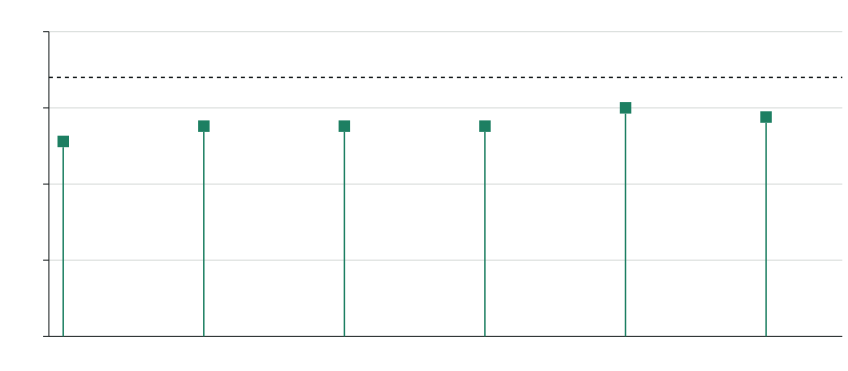

I had the system page of this site reviewed six times by an AI reviewer. Each review gave nine marks, each out of 4, so the top total is 36. The totals were 23, 25, 25, 25, 27 and 26. My bar was 31 out of 36.
After each review I fixed what it found. The next review found something else. Sometimes the new fault came from the last fix.
The test moved. A fresh reviewer scored every round, and the later ones looked at more screen sizes than the first. Of the 54 marks given, none was a 4.
A yardstick that changes each time cannot tell you whether you are getting better. The fault was partly in the page and partly in the test.
The call and who did what
I did not fix this alone. I asked for help, and each role had one job.

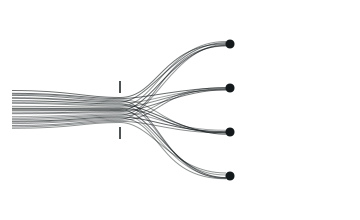
I worried that every round of fixes was thinning what the site is for. So I asked the session that edits the site to speak to the Chief of Staff, the session that coordinates my other teams, and to rely on the roles the Chief chose.
The analyst re-read all six reviews against the purpose of the site. It sorted real faults from noise, set out options for a fixed yardstick and drafted one. I let it stand.
The designer ruled on three layout disputes, keeping each change small. The writer drafted new wording for lines that broke my rules. The builder will turn the rulings into acceptance checks, so later fixes cannot undo them. That work starts on 21 October.
One session applies the changes. Every change to the words needs my say.
Each team was started on my instruction and handed its work back to me for a decision.
Where I decided
The roles proposed. Four things stayed with me.

- Wording Every change to the words on the site needs my say. The writer's drafts went to a second reviewer, which sent one back until a wrong claim about a drawing was fixed.
- Truth check The site must never make the work sound more automatic than it is. A reviewer found two lines that did this: one about a script, and one about the status of a routine duty. I decided how both should be worded, and both were changed before this page went live. A blind review had caught a similar claim earlier, in the design, before any page was built.
- Skills buttons A record said the skills list would have no buttons. I had not given that authority, and I said so. The buttons stay.
- Release Nothing goes live without my go.
The result
The marks moved. Then I had to decide whether that was enough.

Not yet at the bar
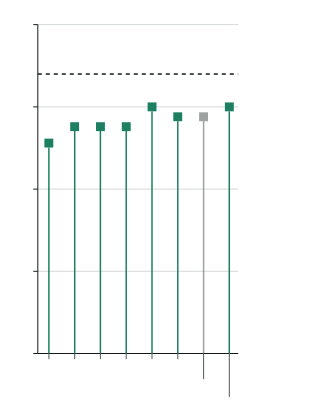
The full re-score gave 27 of 36, against my bar of 31. It did not reach it.
This time the analyst's fixed yardstick did the scoring, the same one each time, so the mark can be compared with the last. Each role was started on my instruction.
I chose to go ahead below my own bar. Deciding what is good enough, and when to stop and proceed, is an executive decision. The roles gave me the score. Another round would have cost more than the faults still open were worth. The call was mine, not theirs.
What the work gave me: a sorted list of real faults, three layout rulings, corrected wording, and a clear line between what the roles proposed and what I decided.
A review score tells you where you stand. Whether that is good enough is the owner's decision, and it is better made with the number in front of you.
